Quitting gets a bad rap. But what if walking away isn’t about giving up—it’s about finally seeing your value?
Workplaces love banners with words like “teamwork” and “loyalty,” but it’s amazing how quickly the tune changes when the spotlight turns to fairness. “Equal effort, equal pay” sounds like common sense—yet the reality can feel like a scene from a comedy: everyone’s talking about equality, but not everyone gets to see it on their paycheck.
When Fairness Backfires: My Wake-Up Call
Let’s talk about the day everything changed for one employee (let’s call her Jenna for comfort). She spent years building efficient systems, crafting shortcuts, and running her role with quiet expertise. She didn’t complain or make waves—why would she? Good employees play nice, right?
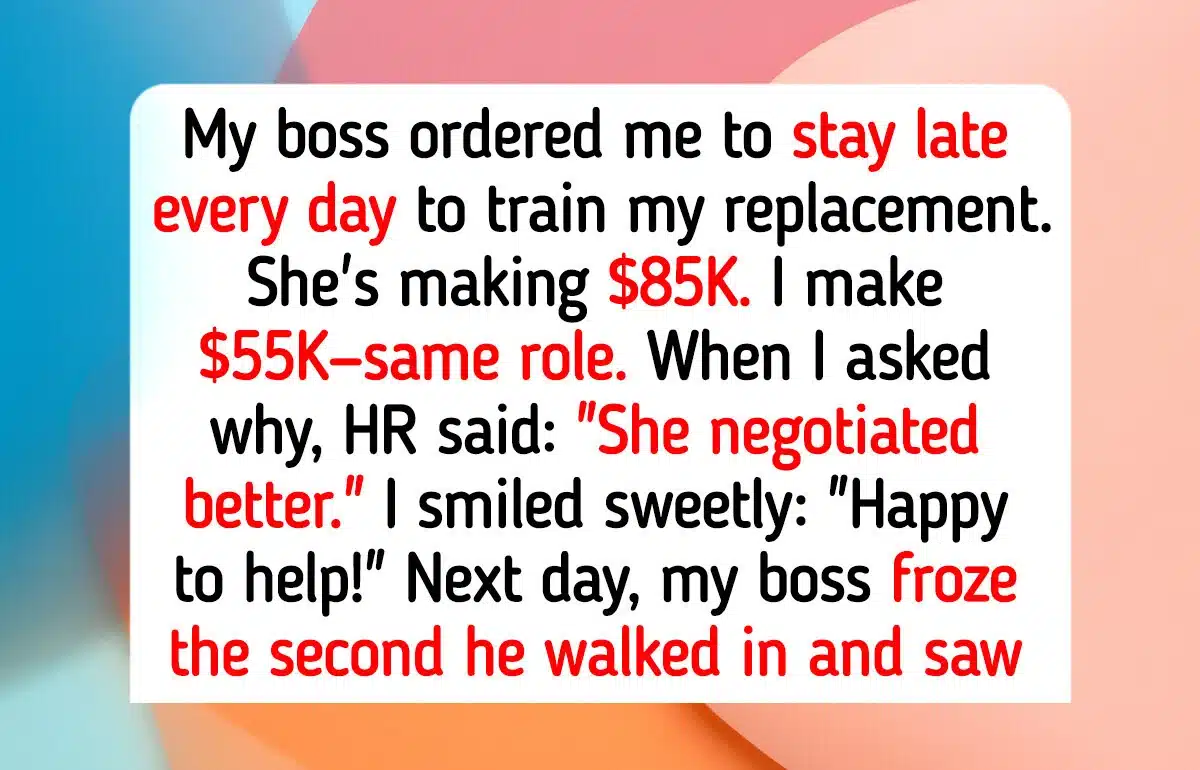
One day, her boss asked her to stay late. Not for a celebration, but to train her replacement. A replacement who—hold on to your ergonomic chair—was making $85,000 a year for the same job Jenna held at $55,000. The math is simple, the message not so much.
Jenna, ever the professional, smiled and said, with just the right amount of workplace sweetness, “Happy to help!” Human Resources explained: “She negotiated better.” Oh, the classic dodge. It happens all the time. But that explanation, while simple, wasn’t satisfactory. Why should negotiation determine worth when the roles—and the work—are the same? And yet, that’s what Jenna was told.
She spent the day walking her replacement through every process, every shortcut, and every secret sauce behind years of hard work. The new hire was kind, even embarrassed when she realized the pay gap. “You should be running this place, not me,” she said. Ouch—truth, meet awkward office moment.
By that evening, Jenna’s mind was made up. She stayed late (again), but not for extra training. She left her boss a thorough progress summary, signed off every document, cleared her desk, and placed a neat resignation letter on the desk—right next to her badge and a note: “Thank you for the experience—it helped me see what I truly deserve.”
The Fallout: Guilt, Doubt, and That Pesky Echo
You’d think that’d be the end. Not quite! Her old team kept messaging. The new hire was struggling. People muttered that leaving “without notice” wasn’t professional. Jenna felt a strange mix: pride for standing up for herself, guilt for leaving so abruptly. Was she too harsh? Was she allowed to move forward without second-guessing herself?
For many readers, this isn’t just Jenna’s story. Plenty have stayed silent, worried about being labeled “difficult” or “ungrateful.” It’s tempting to think silence equals safety—but it really just makes it easier for companies to overlook you.
Perspective from the Peanut Gallery—and the Law
Jenna’s story isn’t unique. Another reader shared a familiar tale from an architectural drawing office: paid $835 a month while two male coworkers earned more than double. When salaries went up, she got a $50 raise; the men received $800. At least one colleague felt bad enough to slip her $300 every month, but that wasn’t the solution. Feeling unseen and underappreciated, she gave a month’s notice and resigned, leaving the company “shocked” that someone so valuable would leave—especially when they had “big plans” for her.
Still, it’s worth noting: when you do move on, employers are only allowed to confirm your title and employment dates—anything more could be legally actionable. But most importantly, you didn’t quit. You reclaimed your worth. That’s not weakness—it’s a refusal to keep teaching people how to undervalue you. That, friends, is self-respect in action.
Letting Go: How to Stop Carrying What’s Not Yours
Leaving isn’t easy, especially when loyalty and old habits pull at your conscience. But guilt is just the echo of boundaries learning to stretch. If the team is struggling now, it’s not your burden to carry. Instead, it’s proof that the structure was held together by your effort, not by a well-designed system. Sometimes the way to show your value is to stop patching holes for others.
- If equal work doesn’t mean equal pay, question the system—not yourself.
- Staying silent helps no one but those who benefit from silence.
- Let the chaos happen without you. You’ve already earned your calm.
- Remember: fair treatment should be a baseline, not a bonus.
So if you’re feeling the sting of walking away, take a deep breath and let your boundaries breathe. Standing up for fairness isn’t just brave—it’s vital. And who knows? The only thing you might have left behind is being overlooked.