When standing up for justice in the workplace, you don’t expect to suddenly become the villain in your own story. Yet, that’s exactly how it can feel when demanding what’s fair—especially after years of being quietly undervalued.
When Loyalty Hits a Wall
“Work hard, be loyal, and you’ll be rewarded”—it’s the workplace promise many of us have heard. But as anyone who’s been stuck watching promotions and raises go to people just for showing up knows, those promises can wear thin. Many have found themselves swallowing their frustration, worrying about appearing ungrateful or just plain difficult. Yet sometimes, a single moment snaps everything into focus and you can no longer ignore what’s right in front of you.
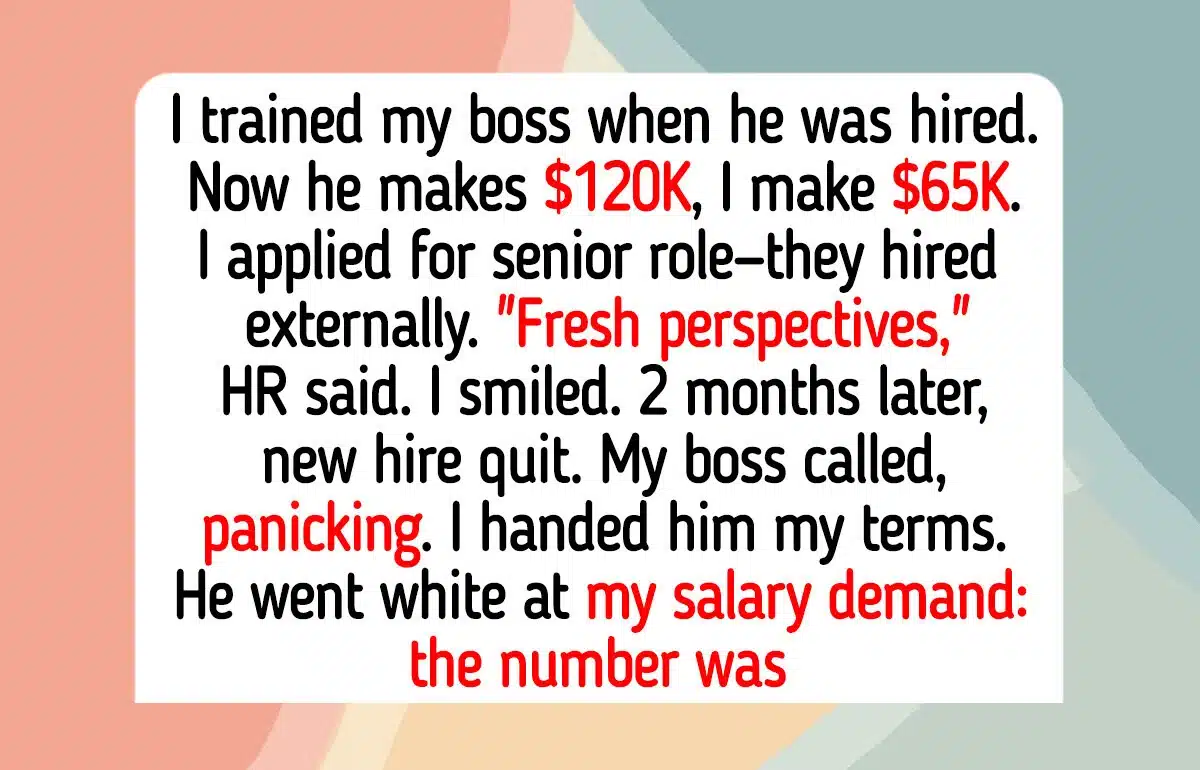
For years, I trained new arrivals, including my own boss. Today, he earns $120,000. I’m at $65,000, and performing half his workload. Let’s skip the mental math: that’s a jaw-dropping gap. And when I put in for a senior role? They hired someone from outside—a person with less experience, in fact. The explanation from HR was that they wanted “fresh perspectives.” I smiled, but inside, something fundamental shifted.
Demanding What’s Fair, Facing the Fallout
It didn’t take long for the cracks to show. Two months later, that new external hire quit, leaving chaos behind. Suddenly, it was my door my boss was knocking on, panicking about looming deadlines. I decided not to repeat old patterns. Instead, I calmly handed him a paper with my terms—my salary request, dollar for dollar the same as his. No negotiating down. I was steady. He was shocked. The color drained from his face as he read the number I knew I was worth.
Now, things at work are tense. My boss acts like I committed some act of betrayal by simply asking to be treated fairly, as if by refusing to accept less, I’ve broken an unspoken rule. Part of me feels powerful for finally claiming my value, but there’s also that shaky feeling—the sense I’ve stepped into a storm I wasn’t fully prepared for.
Navigating the Backlash and Doubt
This is where the mind games begin. Guilt creeps in. Doubts take root: Was I too dramatic? Did I sabotage something that was already broken? Workplace unfairness can worm its way into your own instincts, leaving you questioning if you ever had the right to speak up at all.
- One observer commented, “I understand asking for a raise but asking to make what he makes is not right. You painted a target on your back.”
- Another pondered the workload: “Was it half the boss’s work in addition to your own? If so, $65K might be fair. If not, asking for $125K or more would be reasonable!”
Evaluating your worth isn’t easy when even neutral parties can’t agree on what’s reasonable. But even when people refuse to see your value, it doesn’t mean it isn’t there.
That moment when your instincts finally stand up for you—trust it. Sometimes, your body recognizes injustice long before your mind rationalizes it away. That knot in your stomach? That’s not overreaction; it’s self-protection. Trust that inner warning rather than apologize for it.
Practical Advice for Staying Grounded
- Treat your worth as non-negotiable. Asking for fair compensation often makes others act like you breached an unspoken code. But your value doesn’t shrink just because someone refuses to see it. Hold your ground gently but firmly.
- Stay calm amid drama. When things get heated, nothing diffuses tension like steady composure. Calmly standing by your request is a reminder: you’re operating from thought, not just emotion.
- Mix kindness with courage. You can be warm, respectful, and still firm about your boundaries. People might respect the blend of softness and strength more than they let on!
- Guard your energy. Caring about your work is great, but don’t let it come at the expense of your own needs.
If you’re reading this and thinking, “This feels familiar,” you’re not alone. The struggle for fairness at work is never as simple as a rules handbook might suggest. But you are allowed to choose yourself, even—and especially—when others don’t understand. As you move through the storm, let your own inner compass guide you. The unfairness you’ve felt over the years wasn’t imagined. Stand your ground. Trust that you’re not alone.