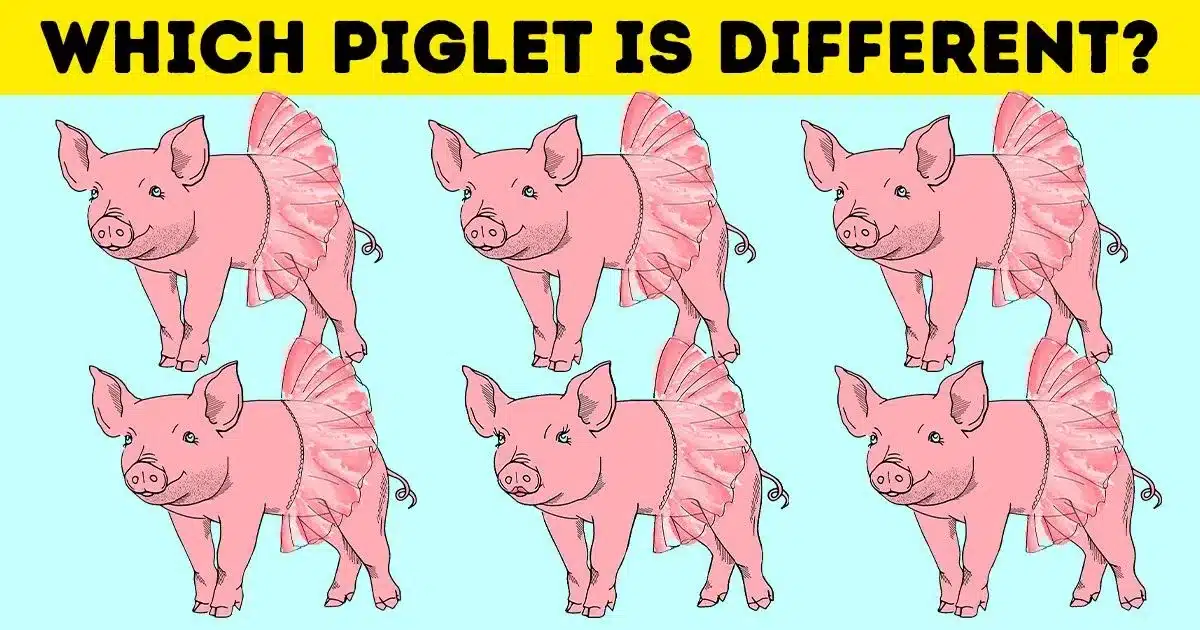
Ready to stretch your brain muscles in ways your treadmill could never dream of? Dive into the dazzling world of visual puzzles – a workout for your mind that’s way more fun (and less sweat-inducing) than running laps!
What Are Visual Puzzles and Why Should You Care?
Visual puzzles, also known as visual brainteasers, take logic and reasoning problems and wrap them up in drawings or images. But don’t be fooled by appearances – just because they all look artsy doesn’t mean they play by the same rules! For instance, a spot the difference puzzle is a visual puzzle, as is a find the hidden object game. Same ingredients, but the recipe for solving each is quite different. Even jigsaw puzzles have expert strategies to help you beat your best time.
Love a good challenge? Science has your back: According to IRSN Neurology, solving these mind-bending marvels involves “nonverbal reasoning and the ability to analyze and synthesize abstract visual stimuli.” In other words, you’re not just passing time – you’re giving your brain a serious tune-up. Think of it as mental cardio (and no gym membership required).
14 Types of Visual Brainteasers – A Tour de Force
- Math Visual Puzzles: Don’t worry, no calculators need to panic. These use images to pose math problems involving everything from addition to patterns and algebra. Example: Two yellow “B” balls balance a blue “D” ball? That’s 2B, not 2B – wait, wrong context!
- Find the Hidden Object: Look past the clutter to find sneaky items hidden in a scene, like a snail, worms, bees, a mushroom, and a sprout with one lonely leaf. Your attention to detail (and probably your patience) will be put to the ultimate test. Slow down, or your brain’s auto-correct mode might mislead you!
- Rebus Puzzles: Decipher common words or phrases from clever arrangements of words, numbers, and symbols. If you solved “travel overseas” from a picture – bravo. These puzzles flex both sides of your brain, mingling logic, language, and creativity.
- Triangle Counting: How many triangles can you spot inside an ever-nesting set of triangles? The answer – 24 – lies in seeing parts within parts and flexing your spatial perception as your noggin learns to focus on elements as wholes and pieces.
- Sudoku: Fill a 9×9 grid so each row, column, and bolded box has the numbers 1 to 9 with no repeats. Master the process of elimination and keep your mind sharp. Legend says sudoku can even help keep brains young!
- Spot the Difference: Two images, tiny differences – your job is to find them. Whether it’s a dog’s spots or drifting flower petals, only sharp eyes will win.
- Square Counting: Like the triangle puzzle, but all squared away! Find all the overlapping squares in a jumble – if your total isn’t 40, time to count again.
- Odd One Out: One thing just doesn’t fit. For example, among similar bowling balls, only one has double thumb holes. See what’s off, and you’re boosting your critical observing skills.
- Droodles: Abstract, line-drawn cartoons with absurdly funny explanations. Maybe it’s a spider doing a handstand, maybe it’s something else – the answer is delightfully open-ended. Flex your creativity and look at life (and doodles) differently!
- Movie Puzzles: Guess the movie from an illustrated scene. You might think it’s just a pop culture flex, but you’re actually working your memory and recall in the process.
- Hidden Cat Among Bats: All bats? Not quite. Hunt for the solitary cat in a gaggle of winged look-alikes and you’ll train your eagle eyes and perseverance.
- Visual Word Puzzles: From fill-in-the-blank to finding anagrams (like discovering “Build” hidden in a scrambled letter row), these puzzles work your creative, linguistic, and problem-solving skills all at once.
- Mazes: An old favorite. Find your way without hitting dead ends. They test spatial sense, decision-making, and – if you’re anything like us – a bit of memory.
- Word Search: Find and circle hidden words in a jumble of letters read every which way. Not just fun, but proven to help delay the onset of Alzheimer’s by sharpening pattern recognition and problem-solving skills.
What Does All This Puzzle Power Do for My Brain?
No matter the flavor, these visual teasers are more than just a way to pass the time. Each one targets different cognitive skills: logic, reasoning, spatial awareness, attention to detail, memory, creativity, linguistic ability, decision-making, and even patience (some days, especially patience).
Studies highlight their benefits, from keeping your brain young to fostering problem-solving abilities. With practice, you might even reach expert status. And remember, Reader’s Digest has earned awards for producing these classic and creative challenges, with dozens of brain-teaser books and volumes to stretch your mind further – talk about brain gains!
Conclusion: Ready to Put Your Visual Skills to the Test?
If you find joy in flexing your mental muscles, visual puzzles offer a playground for your brain. So, grab a pencil (or your sharpest gaze) and set forth. You’ll hone skills you never knew you had – and who knows, maybe even develop the eyes of a hawk or the logic of a seasoned detective. Either way, fun and brainpower are guaranteed to follow!