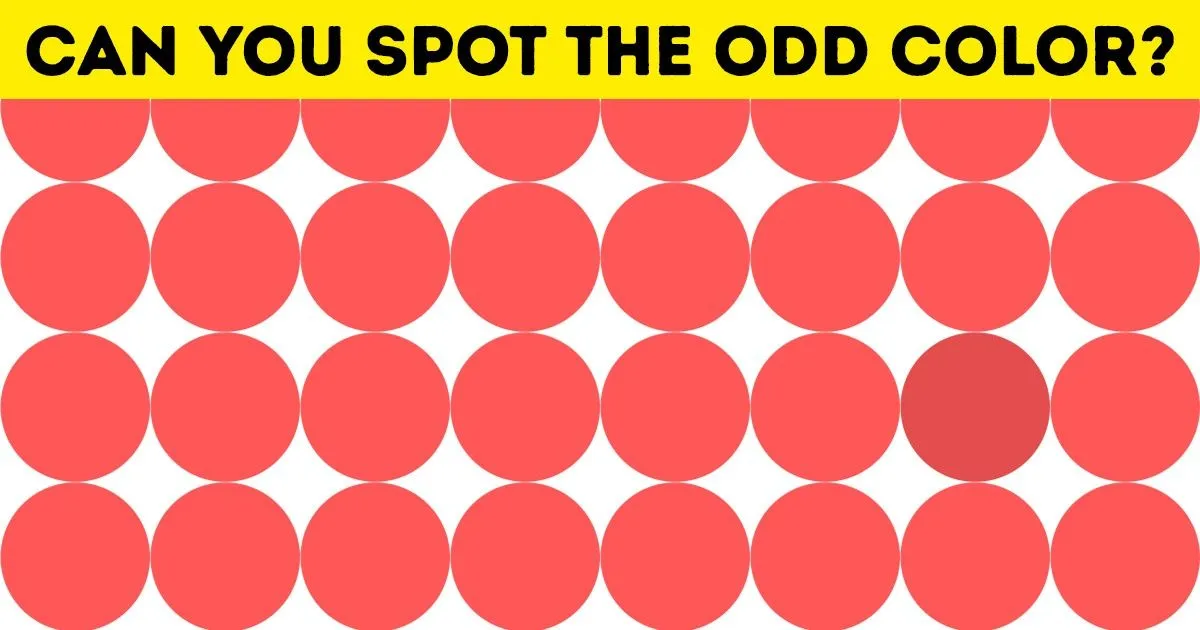
So, you fancy yourself a color detective? Think you can spot the hidden shades lurking in a sea of dots? Well, brace yourself, because the human eye—remarkable as it is—often gets it wrong. Let’s dig into the fascinating (and surprisingly tricky) world of color vision and find out: Can you really spot the hidden colors? Spoiler: Only a select few can pass this test.
The Subtle Science of Color Perception
Let’s start with a truth bomb: light, retinal fatigue, and background effects all influence our perception of color. Our eyes, and the brains that try their best to process what they see, face some very real limitations. This isn’t just an academic issue—it matters a lot for professionals tasked with evaluating or judging color, whether that’s an artist, designer, or just someone determined to match their living room decor.
The Genetics of Color Deficiency: Men, You’re in the Majority
First things first: true color blindness, where everything is reduced to shades of gray, is actually quite rare. The more common culprit is color deficiency. In fact, about one in every 13 men has some type of color deficiency, while for women it’s much less—about one in every 300. (Yes, it does explain a lot, doesn’t it, ladies?)
Blame genetics—a defective recessive gene on the X chromosome. Since women have two X’s, it’s unlikely both will carry the flaw. But men have only one, so if their X is problematic, they’re out of luck in the color department.
- Most common deficiency: Red-green colorblindness
- Main culprit: Color-sensitive chemicals in our eyes can get depleted or malfunction
It gets trickier: stare at an object longer than a few seconds, and those color chemicals in your cones run dry, sending misleading signals to your unsuspecting brain. And there’s even more that can go wrong with those chemical sensors!
Why the Rainbow Isn’t Always as Bright as It Seems
What are our eyes actually capable of? Turns out, our eyes see only three color families: reds, greens, and blues. By mixing these in different proportions, we manage to perceive thousands (if not millions) of colors. But if two sensors—say, the ones for red and green—start acting the same, or if one is missing, our brains can’t combine those classic RGBs correctly. The result? Inaccurate color vision.
The decline doesn’t stop there. As we age, color perception tends to fade. The villain this time is carotene—a pigment protein—sneaking into the cornea and giving it a slow, yellowish tinge. You won’t notice it as it happens, but once the process begins, it’s a slow march toward a duller world.
Here’s a little light at the end of this slightly yellowing tunnel: color perception isn’t just something you’re born with; it’s a skill you can improve. People who judge color differences for a living actually get better with practice—and can push back against the effects of aging, at least a bit.
Everyday Challenges: Why Picking Paint Is a Color Crisis
Ever tried picking a color off a gigantic wall of paint swatches, hoping it matches your couch—using only memory? How did that work out? The truth: human color memory is terrible. Even comparing two colors from across the room is a lost cause. Our brains simply aren’t wired for it!
- Stress, illness, and medications: all can change how your eyes (and brain) process color
- Cultural, regional, and ethnic differences: yes, they play a role, too
- Eyewear tints—such as UV coatings on glasses, or colored contact lenses—subtly alter color vision
So, next time you blame yourself for mismatching those curtains, remember: biology is partly at fault.
Can You Pass the Test?
Let’s put you to the test: observe a circle of colorful dots. Do you spot anything besides a sequence of cheerfully chaotic dots? If you don’t see a ‘6’ in the left circle and a ‘2’ in the right, you probably have some form of color deficiency. But don’t panic—there’s a foolproof way to know for sure.
The Farnsworth-Munsell 100 (FM 100) Hue Test is one such tool for uncovering the truth about your color vision. The challenge? Arrange a series of colored pucks in correct hue order. Sounds simple, right? In reality, the subtle differences can be overwhelming. Only those with truly sharp color vision will get them spot-on.
Curious what a near-perfect color discriminator’s result looks like? There will be just tiny bumps—little errors—showing up in the hue order. A perfect score? That would create a flawlessly smooth circle right at the center.
Final verdict: If you feel a bit overwhelmed by the subtle dance of colors, join the club. But if you want to hone your eye for color? Practice makes a difference, and science has your back—just don’t try matching your couch and curtains from memory!